
The Chinelo
The masked dancer of colorful mockeryn.
7/24/20262 min read
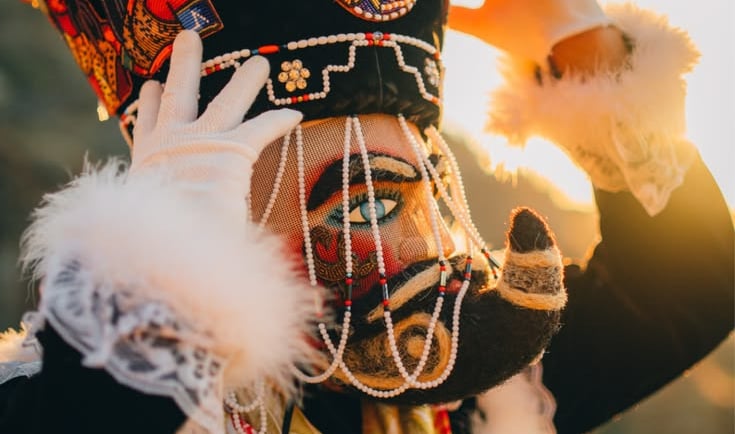
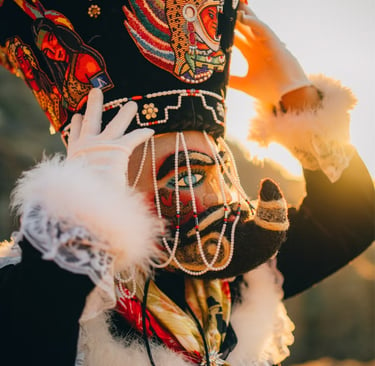
Among the many traditions that define Mexico’s cultural identity, few are as vibrant and enduring as the Chinelo, the masked dancer whose colorful costume and joyful movements have become synonymous with the state of Morelos and its surroundings. Far more than a festive character, the Chinelo represents the remarkable ability of Mexican culture to preserve ancient traditions while continually adapting to new historical realities. It is a living bridge between mesoamerican ceremonial practices, the colonial period, and contemporary Mexican identity.
The Chinelo tradition emerged during the nineteenth century in the towns of Tlayacapan, Tepoztlán, Yautepec, and other communities in Morelos. During Carnival celebrations, indigenous and mestizo people created satirical dances that mocked the elaborate clothing, elegant manners, and European customs of the Spanish European upper classes. Dancers wore exaggerated masks with pale skin, long beards, and blue or green eyes on a dumbfounded gaze, while dressing in luxurious velvet robes and feathered hats. By parodying the colonial elite, they transformed Carnival into a celebration of humor, resistance, and cultural resilience.
Yet the Chinelo’s deeper significance reaches much further into Mexico’s past. Long before the arrival of the Spanish, the peoples of central Mexico practiced ceremonial dances dedicated to the phenomena that bring agricultural cycles, and community life. Music, rhythm, and elaborate costumes played central roles in these sacred performances. Rather than disappearing after the conquest, many of these traditions survived by blending with Catholic festivities introduced by the Spanish. Carnival became one of the most important examples of this cultural fusion, allowing indigenous customs to continue beneath a Christian celebration. In this way, the Chinelo embodies centuries of continuity disguised within change.
The dance itself reflects this ancient heritage. The Chinelo’s distinctive hopping step, accompanied by brass bands performing lively marches, creates an atmosphere of collective celebration. Entire families participate, passing costumes, music, and dance techniques from one generation to the next. Becoming a Chinelo is not merely wearing a costume; it is joining a living tradition that reinforces community identity and local pride. Children often grow up dreaming of participating in Carnival, ensuring that the custom remains vibrant across generations.
Today, the Chinelo has become one of the most recognizable cultural symbols of Mexico. Images of Chinelos appear in murals, tourism campaigns, festivals, and works of contemporary art. Despite modernization, the tradition continues to evolve while maintaining its historical essence.
Ultimately, the Chinelo represents much more than Carnival entertainment. It is a celebration of resilience, memory, and cultural survival. Every leap, every note of music, and every embroidered costume tells the story of a people who transformed conquest into creativity and preserved their heritage through joy. As both an ancient echo and a modern expression of Mexican identity, the Chinelo stands as one of the country’s most enduring cultural treasures.